Rear Window (1954)
Rear Window, Hitchcock’s meditation on voyeurism, where even reality is fake.
A wheelchair bound professional photographer begins to observe his neighbours to pass the time, when he witnesses a murder, he must convince his loved ones and friends of the truth before it is too late.
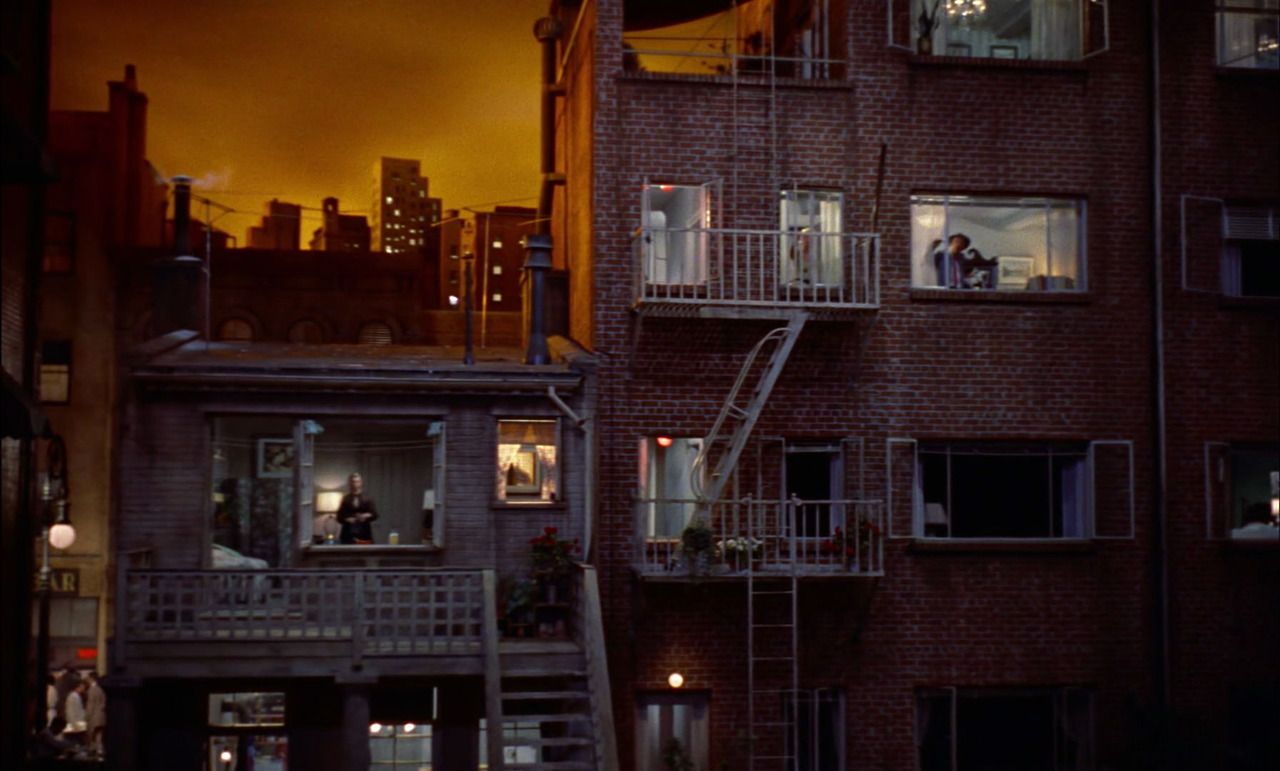
Rear Window has a brilliant aesthetic, filmed it its entirety at Paramount Studios, it blurs the line between what is ‘real’ and what is fake in a way that goes beyond the scope of other films entirely.
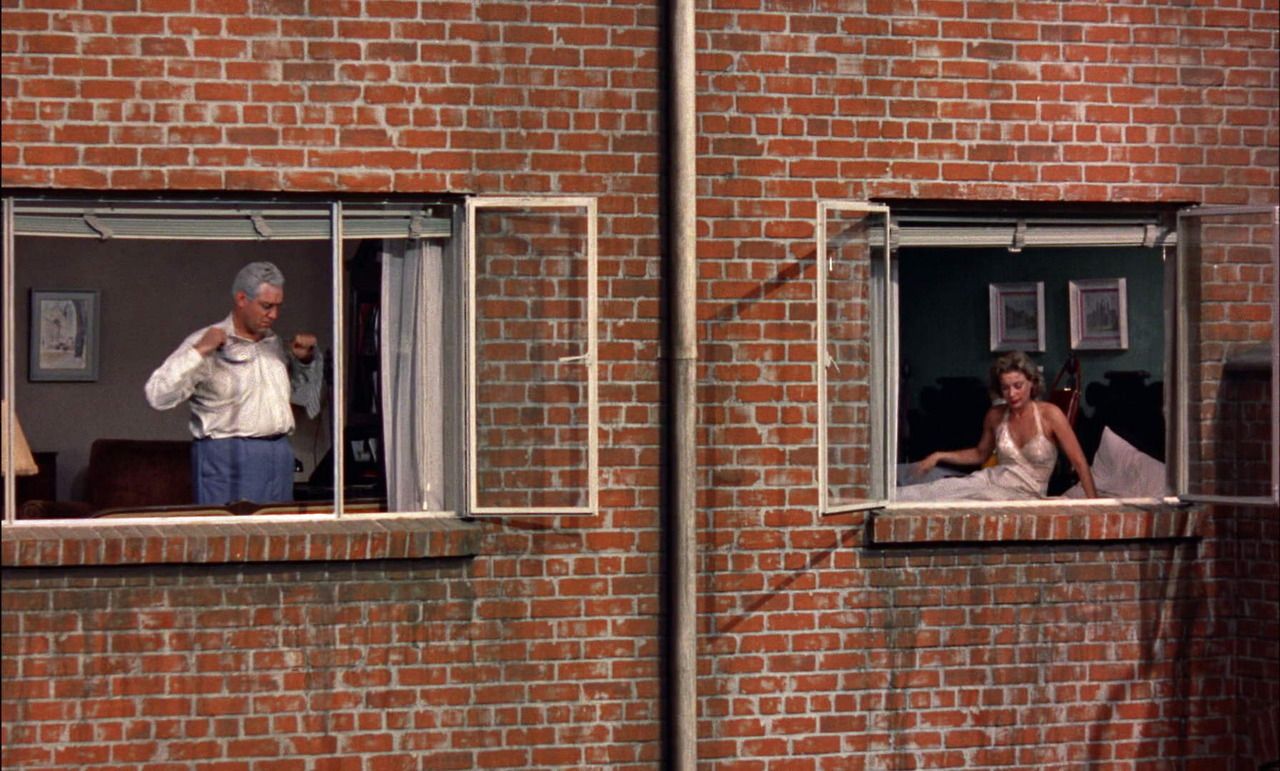
Two of the films three main characters, L.B. “Jeff” Jefferies (James Stewart) and Lisa Carol Fremont (Grace Kelly) lives are devoid of reality. That is to say, from the normal every day lives of normal, every day people. Professional photographer Jeff, is so far removed from every day life that he observes domesticity, albeit the seductive, frenetic domesticity of Hitchcock’s New York, as he might observe an animal in the wild. Lisa, whose every day life is full of cocktails, parties and $1100 dresses lacks the grit Jeff feels she needs in order for him to marry her. It is, first Jeff’s and then Lisa’s observation of their neighbours through Jeff’s rear window that brings them closer together, and the grim underside of the domestic scenes into plain view, buried under the neat rows of flower beds.
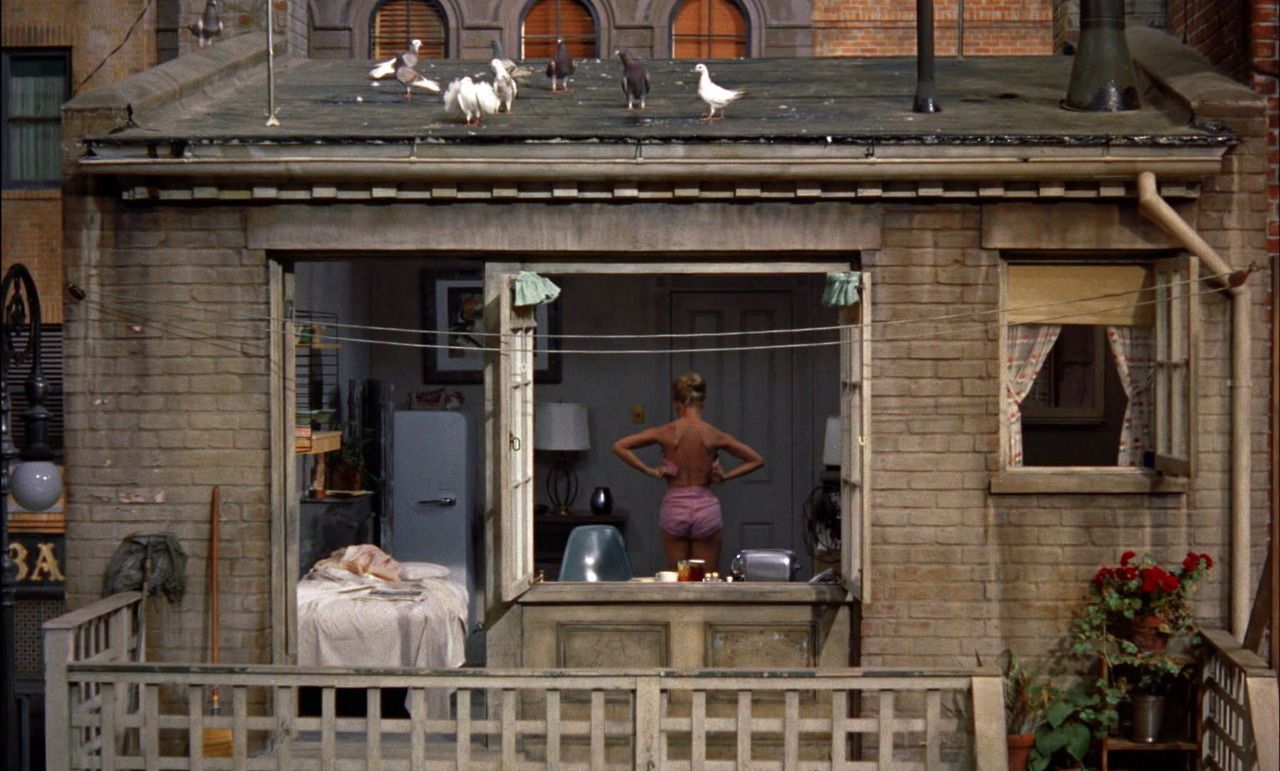
The world that Jeff and Lisa observe is of course however, far from real. While the set created for the film is intricate, it was by design created to seem hyper real. The colours, whilst vivid throughout the whole film, are used symbolically. The ballet dancer who lives in one of the apartments opposite, or ‘Miss Torso’ as Jeff likes to call her, is introduced to us in an entirely pink outfit, a rose in bloom. Her neighbour in the adjoining apartment block, ‘Miss Lonely Heart’, entirely in green, subconsciously envious of a young and beautiful woman, fighting off suitors, who she may not even know. The extended cast populating Jeff’s neighbourhood follow these typical lines, the middle-aged couple (who sleep on their balcony), the lonely bachelor (and brilliant muscian), the female artist, the newly weds and the unhappy married couple, all possible steps in Jeff and Lisa’s relationship. Plath’s pears dangling above her on the tree in her dreams, in the apartments across from them, the many realms of possibility.
When I read reviews of this film, the murder pieced together by Jeff from his wheel chair is the main plot point. But the murder really is secondary to the development of the relationship, we don’t find understand Thorwald’s motive and we don’t really understand why Detective Doyle won’t investigate the crime. The reason for the murder doesn’t really matter. What matters is how it brings the couple and the audience closer together.
Would I recommend to a friend? One hundred times yes.